
"Transcending this mortal plane through the power of hallucinogen induced nerd rage; Tripping balls in the name of science, for the good of the cosmos."
MY SOURCES ARE:
Personal experience and the internet alongside of my own speculation, analyses and conclusions. For all you know I could be lying, so please do some independent research and do not say that I didn't warn you.
PLEASE DISREGARD:
Absolutely everything I say; all pieces of writing and information found within this blog should be considered lies and a work of fiction. Do not ever use anything I've ever said here for anything, ever.
I have, after all, made it very clear that my writings are to be disregarded, as in reality I may well have no idea what I am talking about and do not have any formal qualifications on the subject.
Please point out as many flaws in my reasoning, claims, factual information and grammar as possible.
I love all of you. Thank you for reading.


3-MeO-PCMo, broken down and described
Dosage (oral)
Threshold: 100mg
Light: 100 - 300mg
Common: 300 - 600mg
Strong: 600 - 900mg
Heavy: 900mg +
Duration (oral)
Total duration: 5 - 6 hours
Onset: 1 - 2 hours
Peak: 2 - 3 hours
Come down: 1 - 2 hours
After effects: 2 - 3 hours
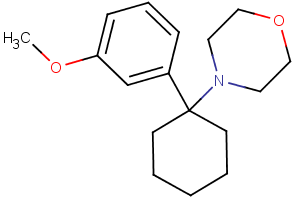
3-MeO-PCMo (4-[1-(3-methoxyphenyl)cyclohexyl]morpholine) is a new morpholine analogue of 3-MeO-PCP. It is a dissociative NMDA receptor antagonist and anesthetic drug of the arylcyclohexylamine chemical class with a potency of less than 1/10th of that of 3-MeO-PCP.
This compound induces a state referred to as “dissociative anesthesia” when ingested and is therefore used as a recreational drug. 3-MeO-PCMo has recently become freely available through online research chemical vendors[1] where it is being sold as a designer drug.
Although very little is known about this compound, similar morpholine analogues of phencyclidine have been researched before.[2][3]
In terms of its chemistry, 3-MeO-PCMo, or 4-[1-(3-methoxyphenyl)cyclohexyl]morpholine, is classified as an arylcyclohexylamine
drug. Ayrlcyclohexylamine drugs are named for their structures which
include a cyclohexane ring bound to an aromatic ring along with an amine
group at the same location. The aryl substituent of 3-MeO-PCMo is a
phenyl ring with a methoxy (CH3-O-) substituent at R3, which is bound to a six-membered cyclohexyl ring. Bound at the same location on the cyclohexyl ring R1 is an amine group which is incorporated into a morpholine ring as R4. Morpholine is a six-membered heterocyclic ring with an oxygen subsitutent at R1. 3-MeO-PCMo is a morpholine analogue to 3-MeO-PCP, which lacks an oxygen moiety in its six-membered amine ring (a piperidine ring instead of a morpholine ring).
In terms of its pharmacology, due to the lack of research regarding the substance, all discussion regarding the pharmacology of it is purely based on its structure and subjective effect similarities to other arylcyclohexylamine dissociatives such as 3-MeO-PCP, PCP and MXE. With this in mind, 3-Meo-PCMo is thought to act as an NMDA receptor antagonist. NMDA receptors allow for electrical signals to pass between neurons in the brain and spinal column; for the signals to pass, the receptor must be open. NMDA receptor antagonists close the NMDA receptors by blocking them. This disconnection of neurons leads to loss of feeling, difficulty moving, and eventually the famous “hole.”
The effects listed below are based upon the subjective effects index and personal experiences of PsychonautWiki contributors. The listed effects will rarely (if ever) occur all at once, but heavier dosages will increase the chances and are more likely to induce a full range of effects.
Physical effects:
The subjective physical effects of 3-MeO-PCMo can be broken down into several components which progressively intensify proportional to dosage. These are described below and generally include:
- Spontaneous tactile sensations - The 3-MeO-PCMo body high is a soft, warm, motionless and pleasurable tingling sensation which is all-encompassing across the body and not location specific to any area.
- Decreased bodily weight - This creates the sensation that the body is floating and has become entirely weightless. This effect is strangely stimulating and encourages physical activities at low to moderate doses by making the body feel light and effortless to move.
- Nausea - It’s worth noting that high dose 3-MeO-PCMo trips can sometimes result in nausea and vomiting at the peak of the trip. For most people, this is surprisingly not as unpleasant as they would initially expect due to the accompanying detachment from the physical senses.
- Motor control loss - A loss of gross and fine motor control alongside of balance and coordination is prevalent within 3-MeO-PCMo and becomes especially strong at higher doses. This means that one should be sitting down before the onset (unless experienced) in case of falling over and injuring oneself.
- Physical euphoria
- Tactile disconnection
- Tactile suppression
- Physical autonomy
Cognitive effects:
The general head space of 3-MeO-PCMo is often described as simplistic and shallow in comparison to that of MXE and ketamine. The specific cognitive effects can be broken down into several separate subcomponents which are listed and described below:
- Depersonalization
- Derealization
- Consciousness disconnection
- Memory suppression (ego death)
- Thought deceleration
- Immersion enhancement
- Information processing suppression
- Time distortion
- Euphoria
- Introspection
- Déjà vu
- Conceptual thinking
- Anxiety suppression
- Disinhibition
- Amnesia
Visual effects:
Suppressions:
This substance does not enhance visual stimuli; instead, it tends to degrade and decrease visual aptitude in a variety of ways which generally include:
- Visual disconnection - This eventually results in the 3-MeO-PCMo equivalent of the famous “k-hole” or, more specifically, holes, spaces and voids alongside of structures.
- Double vision - This component is prevalent at moderate to heavy doses and makes reading impossible unless one closes an eye.
- Pattern recognition suppression - This effect generally occurs at higher doses and makes one unable to recognize and interpret perceivable visual data.
- Visual acuity suppression
Distortions:
The visual geometry found within 3-MeO-PCMo can be described as very dark and bland when compared to that of ketamine or DXM. It often consists of many tiny interlocking and woven lines. It does not extend beyond level 4 geometry and can be comprehensively described through its variations as simplistic in complexity, algorithmic in style, synthetic in feel, unstructured in organization, dimly lit in lighting, multicoloured in scheme, glossy in shading, soft in edges, small in size, slow in speed, smooth in motion, equal in rounded and angular corners, immersive in depth and consistent in intensity.
Auditory effects:
Physical health effects, potential addiction and tolerance:
The toxicity and long-term health effects of recreational 3-MeO-PCMo
use have not been studied in any scientific context and the exact toxic
dose is unknown. This is because 3-MeO-PCMo is a research chemical with
very little history of human usage. Anecdotal evidence from people who
have tried 3-MeO-PCMo within the psychonaut community suggests that
there are no negative health effects attributed to simply trying this
drug at low to moderate doses or using it very sparingly (but nothing
can be completely guaranteed).
There is a tolerance build up with 3-MeO-PCMo which results in the need to consume increasingly large doses in order to achieve the same level of effects. This should reset to baseline after 1 - 2 weeks. There may be some addictive potential, but this is still unknown.
In terms of its long-term health effects when used repeatedly and with excess for extended periods of time, 3-MeO-PCMo seems to exhibit almost identical bladder and urinary tract problems to those found within ketamine, MXE and other arylcyclohexylamines, but to an even more extreme extent. This is because 3-MeO-PCMo is 50% less potent than that of ketamine which means significantly more of the drug must be consumed in order to achieve the same effects. Symptoms of 3-MeO-PCMo-induced cystitis can become extremely serious and can be described as:
- Urinary frequency - Urinary frequency is the need to empty the bladder every few minutes.
- Urinary urgency - This can be described as a sudden and compelling need to urinate.
- Urinary pressure - This is experienced as a constant sensation of fullness in the bladder that is unrelieved by urination.
- Pelvic and bladder pain - Pain can develop suddenly and severely, particularly as the bladder fills with urine.
- Hematuria - Hematuria is visible blood in the urine.
- Incontinence - This is the leakage of urine.
All of these, however, can easily be avoided by simply not using
3-MeO-PCMo on a daily or even weekly basis and manually limiting one’s
usage of the substance.
Legal issues:
3-MeO-PCMo is currently a legal grey area drug worldwide and is freely available through the use of online research chemical vendors. However, this does not guarantee anyone to be immune from legal prosecution should they be found in possession of this substance as the legality is likely to vary from country to country.
Within the U.K. specifically, as 3-MeO-PCMo is the morpholine analogue of 3-MeO-PCP,
it is therefore an arylcyclohexylamine (ACH) that is not controlled in
the U.K. because a morpholine substituion on the amine is not proscribed
by the country’s generic ACH laws.
Conclusion:
3-MeO-PCMo is by far the closest experience to that of MXE or ketamine currently available in the U.K. legal research chemical market. Its absurd lack of potency, however, makes it unusable for regular usage due to its proportionally adverse effects on the bladder.
This substance breakdown was written through collaboration between PsychonautWiki contributors Kaylee, Josikins and Oscarette. The full article is available here.
Ephenidine, broken down and described
Dosage (oral)
Threshold: 50 - 75mg
Light: 75 - 110mg
Common: 110 - 150mg
Strong: 150 - 200mg
Heavy: > 200mg +
Duration (oral)
Total duration: 5 - 7 hours
Onset: 10 - 30 minutes
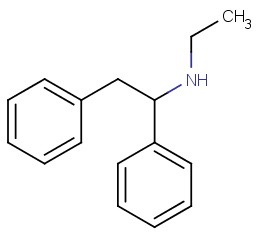
Ephenidine (N-Ethyl-1,2diphenylethylamine) is a dissociative NMDA receptor antagonist and anesthetic drug of the phenethylamine chemical class. It has similar effects to that of the arylcyclohexylamine and morphinan classes of dissociatives.
This compound induces a state referred to as “dissociative anesthesia”
and is used as a recreational drug. Very little is known about this
substance, but it has recently become freely available through online research chemical
vendors where it is being sold as a designer drug. Due to the lack of
research regarding the substance, all discussion regarding the
pharmacology of it is purely based on its structure and subjective effect similarities to other piperidine dissociatives such as diphenidine and methoxphenidine.
In terms of its chemistry, ephenidine is a molecule of the diarylethylamine class. It contains a substituted phenethylamine skeleton with an additional phenyl ring bound to Rα. An ethyl chain is bound to the terminal amine RN of the phenethylamine. Ephenidine is structurally analogous to diphenidine and MXP, but is not a piperidine dissociative. Ephenidine shares a diphenylethylamine skeleton with diphenidine and MXP, but lacks a piperidine substitution.
In terms of its pharmacology, no formal studies have been carried out. However, ephenidine is thought to act as an NMDA receptor antagonist due to its structural similarities to diphenidine. NMDA receptors allow for electrical signals to pass between neurons in the brain and spinal column; for the signals to pass, the receptor must be open. NMDA receptor antagonists close the NMDA receptors by blocking them. This disconnection of neurons leads to loss of feeling, difficulty moving, and eventually the famous “hole.” This compound induces considerable stimulation at higher doses which suggests that it might function as a serotonin, dopamine and noradrenaline reuptake inhibitor in a similar manner to other dissociatives.
The effects listed below are based upon the subjective effects index and personal experiences of PsychonautWiki contributors. The listed effects will rarely (if ever) occur all at once, but heavier dosages will increase the chances and are more likely to induce a full range of effects.
Physical effects:
The subjective physical effects of ephenidine can be broken down into
several components which progressively intensify proportional to
dosage. These are described below and generally include:
- Tactile disconnection
- Spontaneous tactile sensations - The ephenidine body high is a soft and pleasurable tingling sensation which is motionless and all-encompassing with no specific location.
- Stimulation - This compound provides stimulating effects at lower dosages which are less intense than that of diphenidine or methoxphenidine.
- Tactile suppression - This partially to entirely suppresses one’s sense of touch, creating feelings of numbness within the extremities. It is responsible for the anaesthetic properties of this substance.
- Motor control loss - A loss of gross and fine motor control alongside of balance and coordination is prevalent within the ephenidine experience and becomes especially strong at higher doses. This means that one should be sitting down before the onset (unless one is experienced) in case of falling over and injuring oneself.
- Decreased bodily weight - This creates the sensation that the body is floating and has become entirely weightless. This effect is strangely stimulating and encourages physical activities at low to moderate doses by making the body feel light and effortless to move.
- Physical autonomy
- Increased heart rate
Cognitive effects:
The general head space of ephenidine is often described as particularly euphoric and clear-headed in comparison to that of DXM and ketamine. The specific cognitive effects can be broken down into several separate subcomponents which are listed and described below:
- Depersonalization
- Derealization
- Consciousness disconnection
- Memory suppression (ego death)
- Thought deceleration
- Information processing suppression
- Time distortion
- Euphoria
- Introspection
- Déjà vu
- Conceptual thinking
- Compulsive redosing
- Anxiety suppression
- Disinhibition
- Amnesia
- Unity and interconnectedness
Visual effects:
Suppressions:
This substance does not enhance visual stimuli; instead, it tends to degrade and decrease visual aptitude in a variety of ways which generally include:
- Visual disconnection - This eventually results in the ephenidine equivalent of the famous “k-hole” or, more specifically, holes, spaces and voids alongside of structures. However, it is worth noting that particularly heavy dosages must be consumed to reach the deepest state of this component in comparison to other more classical dissociatives such as ketamine or methoxetamine.
- Visual acuity suppression
- Double vision - This component is prevalent at moderate to heavy dosages and makes reading impossible unless one closes an eye.
- Pattern recognition suppression - This effect generally occurs at higher dosages and makes one unable to recognize and interpret perceivable visual data.
Distortions:
Ephenidine exhibits a full array of dissociative distortions and alterations in visual perception which generally includes:
- Drifting (melting, flowing, breathing and morphing) - In comparison to other dissociatives, this effect is more prominent than ketamine, MXE, diphenidine and methoxphenidine. The visual drifting is simplistic, slow and smooth in motion, static in appearance and unrealistic/cartoon-like in style.
- Perspective distortions
- Scenery slicing
Geometry:
The visual geometry found within ephenidine can be described as very distinct and psychedelic when compared to that of ketamine, MXE, methoxphenidine and diphenidine. It is considerably less detailed than that of DXM. It does not extend beyond level 5 and can be comprehensively described through its variations
as simplistic in complexity, algorithmic in style, synthetic in feel,
unstructured in organization, dimly lit in lighting, multicoloured in
scheme, glossy in shading, soft in edges, small in size, slow in speed,
smooth in motion, equal in rounded and angular corners, immersive in
depth and consistent in intensity.
Hallucinatory states:
At high doses, ephenidine can produce a full range of high level hallucinatory states in a fashion that is less consistent and reproducible than that of many other commonly used psychedelics. These effects include:
- Internal hallucinations (autonomous entities; settings, sceneries, and landscapes; alterations in perspective and scenarios and plots) - In comparison to other dissociatives, this effect can occur at heavy dosages, but is considerably less common than the same effect found within psychedelics and deliriants. It can be comprehensively described through its variations as delirious in believability, fixed in style, equal in new experiences and memory replays in content, autonomous in controllability and solid in style.
Auditory effects:
The auditory effects are common in their occurrence and exhibit a range of effects which commonly includes:
Physical health effects, potential addiction and tolerance:
The toxicity and long-term health effects of recreational ephenidine use have not been studied in any scientific context and the exact toxic dosage is unknown. This is because ephenidine is a research chemical with very little history of human usage. Anecdotal evidence from people who have tried ephenidine within the psychonaut community suggests that there are no negative health effects attributed to simply trying this drug at low to moderate doses or using it very sparingly (but nothing can be completely guaranteed).
There is a very strong tolerance build up with ephenidine which results in the need to consume increasingly large doses in order to achieve the same level of effects. This should reset to baseline after 1 - 2 weeks. There may be some addictive potential, but this is still unknown.
Legal issues:
Ephenidine is currently a legal grey area drug worldwide and is
freely available through the use of online research chemical vendors.
However, this does not guarantee anyone to be immune from legal
prosecution should they be found in possession of this substance as the
legality is likely to vary from country to country.
Conclusion:
In conclusion, ephenedine is a deeply profound dissociative which presents a full range of effects at high enough doses. Although it is not an MXE replacement, it is perhaps the best novel dissociative to recently arrive on the legal research chemical scene and is superior to that of diphenidine or MXP in my opinion.
This substance breakdown was written through collaboration between PsychonautWiki contributors Kaylee, PJosepherum, Josikins and Oscarette. The full article is available here.

Hey there, depending on how closely you follow this project you may be aware that this website is simply the smaller scale blog to our much bigger project known as PsychonautWiki.
I have recently set up a Patreon page for PsychonautWiki to potentially help mitigate our progressively more expensive server costs.
If this website has made a difference to your life and you enjoy reading it, donations of any size are sincerely appreciated and go directly towards the hosting of our expensive server, producing its content and furthering the cause. So if you are feeling kind then please click the image above and consider becoming a patreon by pledging as little as $1 per month. Every little helps!
Thank you so much in advance <3 <3
1P-LSD, broken down and described

Dosage (oral)
Threshold: < 20 µg
Light: 25 - 75 µg
Common: 50 – 150 µg
Strong: 150 – 400 µg
Heavy: > 400 µg
Duration (oral)
Total duration: 8 - 10 hours
Onset: 30 minutes - 2 hours
Peak: 2 - 5 hours
Come down: 2 - 4 hours
After effects: > 2 hours
1-propionyl-lysergic acid diethylamide (abbreviated as 1P-LSD or 1P-LAD) is a hallucinogenic psychedelic drug of the lysergamidefamily.
This substance has little to no history of human usage. It has not been reported upon within any formal scientific literature and is almost entirely unknown by both the academics and public. However, given its similarity to LSD and ALD-52, the structural similarity reliably suggests an extremely similar effect profile. Due to the lack of research regarding the substance, all discussion regarding the pharmacology of it is purely based on its structure and subjective effect similarities to other lysergamides.
Over the first few months of 2015, it came to be marketed as a
legal alternative to LSZ,
AL-LAD and LSD
through online research chemical vendors which are currently selling
the compound in the form of freely available blotter sheet tabs. It
is usually marketed as a research chemical which means that it is
sold legally but not meant for human consumption.
In terms of its chemistry, 1P-LSD is a member of the lysergamide family and is generally regarded as a psychedelic. It is analogous to LSD, featuring a propionyl group bound to the nitrogen of the indole group. It is homologous to ALD-52, which contains an acetyl group instead of the propionyl group bound to the same location.
In terms of its pharmacology, 1P-LSD acts as a 5-HT2A partial agonist. The psychedelic effects are believed to come from 1P-LSD’s efficacy at the 5-HT2A receptors. However, the role of these interactions and how they result in the psychedelic experience continues to remain elusive.
It has been theorized that 1P-LSD may be a prodrug to LSD.
Despite this prevailing theory, however, it appears that this is likely
untrue. It has both a shorter duration, subtly distinct subjective
effects and an extremely close potency which are three things which are
rarely associated with a prodrug (especially in combination).
The effects of 1P-LSD are almost identical to that of its close structural relative LSD with the differences being so minuscule they are almost negligible or primarily due to different responses within the tripper.
The effects listed below are based upon the subjective effects index and personal experiences of PsychonautWiki contributors. The listed effects will rarely if ever occur all at once but heavier dosages will increase the chances and are more likely to induce a full range of effects.
Physical effects:
The physical effects of 1P-LSD can be broken down into several components all of which progressively intensify proportional to dosage. These are described below and generally include:
- Spontaneous tactile sensations - The “body high” of 1P-LSD can be described as proportionally very intense in comparison to its accompanying visual and cognitive effects. It behaves as a euphoric, fast moving, sharp and location specific tingling sensation. For some, it is manifested spontaneously at different unpredictable points throughout the trip, but for most it maintains a steady presence that rises with the onset and hits its limit once the peak has been reached. At moderate to high doses of 1P-LSD, this sensation will usually hit its highest level and become so overwhelming that people may find themselves writhing on the floor in complete pleasure.
- Stimulation - In terms of its effects on the physical energy levels of the tripper, 1P-LSD is usually considered to be very energetic and stimulating without being forced. For example, when taken in any environment it will usually encourage physical activities such as running, walking, climbing or dancing. In comparison, other more commonly used psychedelics such as psilocin are generally sedating and relaxed.
- Nausea - Mild nausea is occasionally reported when consumed in moderate to high dosages and either passes instantly once the tripper has vomited or gradually fades by itself as the peak sets in.
- Tactile enhancement
- Bodily control enhancement
- Salivation
- Increased heart rate
- Pupil dilation
Cognitive effects:
The cognitive effects of 1P-LSD can be broken down into several components all of which progressively intensify proportional to dosage. In comparison to other psychedelics such as psilocin, LSA and ayahuasca, 1P-LSD is significantly more stimulating and fast paced in terms of the specific style of thought stream produced and contains a large number of potential effects.
The most prominent of these cognitive effects generally include:
- Current mind state enhancement
- Thought acceleration
- Novelty enhancement
- Time distortion
- Analysis enhancement
- Personal bias suppression
- Conceptual thinking
- Memory suppression (ego death)
- Thought loops
- Feelings of interdependent opposites
- Delusions
- Unity and interconnectedness
- Feelings of self-design
- Spirituality enhancement
- Delineation of thought
Visual effects:
Enhancements
1P-LSD presents a full and complete array of visual enhancements which generally includes:
Distortions
1P-LSD presents a full and complete array of visual distortions which generally includes:
- Drifting (melting, breathing, morphing and flowing) - In comparison to other psychedelics, this effect can be described as highly detailed and cartoon-like in its appearance. The distortions are slow and smooth in motion and fleeting in their appearance.
- Tracers
- Depth perception distortions
- Symmetrical texture repetition
- Colour shifting
- Perspective distortions
The visual geometry that is present throughout this trip can be described as more similar in appearance to that of 2C-B or 2C-I than psilocin, LSA or DMT. It can be comprehensively described through its variations as primarily intricate in complexity, algorithmic in form, unstructured in organization, brightly lit, colourful in scheme, synthetic in feel, multicoloured in scheme, flat in shading, sharp in edges, large in size, fast in speed, smooth in motion, angular in its corners, non-immersive in depth and consistent in intensity.
In the case of higher level geometry, this substance is level 8A dominant but is also capable of inducing 8B Geometry under the right circumstances.
Hallucinatory states
1P-LSD is capable of producing a full range of low and high level hallucinatory states in a fashion that is significantly less consistent and reproducible than that of many other commonly used psychedelics. These effects include:
- Transformations
- Internal hallucinations (Autonomous entities, Settings, sceneries, and landscapes, Alterations in perspective and Scenarios and plots) - Although 1P-LSD is technically capable of producing hallucinatory states in a fashion that is on par with psilocin or DMT in its vividness and intensity, these effects are rarer and more inconsistent in comparison. While traditional psychedelics such as LSA, ayahuasca and mescaline will induce internal hallucinations near consistently at level 5 geometry and above, 1P-LSD will for most simply go straight into Level 8A visual geometry. This lack of consistently induced hallucinatory breakthroughs means that for most, 1P-LSD is not quite as deep of an experience as certain other psychedelics. On the occasion that they are induced, however, they can be comprehensively described in terms of their variations as lucid in believability, interactive in style, new experiences in content, autonomous in controllability and geometry-based in appearance.
Auditory effects:
The auditory effects of 1P-LSD are common in their occurrence and exhibit a full range of effects which commonly include:
Physical health effects, potential addiction and tolerance:
The toxicity and long term health effects of recreational 1P-LSD use do not seem to have been studied in any scientific context and the exact toxic dosage is unknown. This is because 1P-LSD is a research chemical with very little history of human usage. Anecdotal evidence from people within the psychedelic community who have tried 1P-LSD suggests that there are no negative health effects attributed to simply trying this drug at low to moderate doses or using it very sparingly (but nothing can be completely guaranteed).
1P-LSD is non-habit forming and the desire to use it can actually decrease with use. It is most often self-regulating.
An almost immediate tolerance is built to 1P-LSD after ingestion, preventing one from experiencing its full effects more often than every 4-7 days unless they increase their dose significantly.
Legal issues:
1P-LSD is currently a grey area compound within all parts of the world. This means that it is not known to be specifically illegal within any country, but that people may still be charged for its possession under certain circumstances such as under analogue laws and with the intent to sell or consume.
Conclusion:
In conclusion, 1P-LSD is an exciting new research chemical with little to no information regarding its existence within the formal scientific literature. In terms of the effects it produces, it is identical to LSD apart from a slightly shorter duration and is therefore an excellent and worthwhile alternative which is superior to that of LSZ and AL-LAD.
This substance breakdown was written through collaboration between PsychonautWiki contributors Josikins and Oscarette. The full article (including references) is available here.
2C-C, broken down and described
Dosage (oral)
Threshold : 5 - 10 mg
Light : 10 – 30 mg
Common : 30 – 50 mg
Strong : 50 – 70 mg
Heavy : 70+ mg
Duration (oral)
Total duration : 4 - 6 hours
Onset : 1 - 3 hours
Peak : 2 - 3 hours
Come down : 1 - 2 hours
After effects : > 2 hours
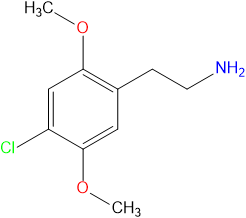
2C-C (2,5-Dimethoxy-4-chlorophenethylamine) is a psychedelic phenethylamine of the 2C-x family.[1] It was first synthesized by Alexander Shulgin and described in his 1991 book PiHKAL: A Chemical Love Story.
In modern times, it is used as a recreational drug and an entheogen, rarely sold on the streets and almost exclusively obtained as a grey area research chemical through the use of online vendors. Therefore, it is relatively uncommon and has only a short history of human use.
Many users report that 2C-C is gentler and more sedating than other closely related psychedelic phenethylamines.
In terms of its chemistry, 2C-C is a substituted phenethylamine with methoxy groups attached to carbons R2 and R5 as well as a chlorine attached to carbon R4.
In terms of its pharmacology, 2C-C’s psychedelic effects are believed to come from its efficacy at the 5-HT2A receptor as a partial agonist. However, the role of these interactions and how they result in the psychedelic experience continues to remain elusive.
The effects listed below are based upon the subjective effects index and personal experiences of PsychonautWiki contributors. The listed effects will rarely if ever occur all at once but heavier dosages will increase the chances and are more likely to induce a full range of effects.
Physical effects:
The physical effects of 2C-C can be broken down into 9 components all of which progressively intensify proportional to dosage. These are described below and generally include:
- Spontaneous tactile sensations - The “body high” of 2C-C can be described as a pleasurable, warm, soft, all-encompassing and mild tingling sensation. This maintains a consistent presence that steadily rises with the onset and hits its limit once the peak has been reached.
- Stimulation and Sedation - In terms of its effects on the physical energy levels of the tripper, the 2C-C experience begins with mild stimulation, but usually becomes very sedating as the experience progresses and lacks the distinctive energetic feeling associated with most phenethylamines. This feeling was accurately described in Alexander Shulgin’s PiHKAL as “an intense form of relaxation.”
- Nausea - Although nausea remains present, in comparison to other phenethylamines such as 2C-E, 2C-I or 2C-B, this remains extremely mild and dissipates quickly even with higher dosages. It is perhaps one of the most physically underwhelming psychedelics out there for this reason alone.
- Bodily control enhancement and Motor control loss - Whilst at lower doses one may find that their bodily control is enhanced, at higher dosages it seems to become suppressed.
- Tactile enhancement
- Temperature regulation loss
- Salivation
- Increased heart rate
Cognitive effects:
The head space of 2C-C is described by many as one which is both insightful and relatively normal in its thought processes even at moderate to high dosages.
The total sum of these cognitive components regardless of the setting generally includes:
- Analysis enhancement
- Empathy, love and sociability enhancement - This component is consistently manifested only in the context of social settings in which one is within the company of others. These feelings of sociability, love and empathy are a little weaker and less sharp than those found on substances such as MDMA and 2C-B. They primarily manifest during the stimulating onset of the experience and dissipate once the full extent of the trip takes place.
- Thought acceleration
- Time distortion
- Novelty enhancement
- Sexual arousal
- Conceptual thinking
- Thought connectivity
- Current mind state enhancement
- Personal bias suppression
- Memory suppression
- Unity and interconnectedness
Visual effects:
Enhancements
2C-C presents a full and complete array of possible visual enhancements which generally includes:
Distortions
2C-C presents a full and complete array of possible visual distortions which generally includes:
- Drifting (melting, flowing, breathing and morphing) - In comparison to other psychedelics, this effect can be described as highly detailed, slow and smooth in motion, static in appearance and realistic in style.
- Tracers
- Colour shifting
Geometry
The visual geometry that is present throughout this trip can be described as more similar in appearance to that of 4-AcO-DMT or Ayahuasca than that of LSD, 2C-B or 2C-I. They can be comprehensively described as structured in their organization, organic in geometric style, intricate in complexity, large in size, slow and smooth in motion, colourful in scheme, glossy in colour, equally blurred and sharp in their edges and equally rounded and angular in their corners. They give off a contradictory natural and synthetic feel to them that at higher dosages. While the geometry for 2C-C has yet to be formally confirmed, it seems more likely to result in states of Level 8B visual geometry over Level 8A.
Hallucinatory states
2C-C produces a full range of high level hallucinatory states in a fashion that is more consistent and reproducible than that of many other commonly used psychedelics. This holds particularly true in comparison to other substances within the phenethylamine family. These effects include:
- Transformations
- Internal hallucinations - In comparison to other psychedelics such as LSD, 2C-C is extremely high in hallucinations embedded within visual geometry. This particular effect commonly contains hallucinations with scenarios, settings, concepts and autonomous entity contact. They are more common within dark environments and can be described as internal in their manifestation, lucid in believability, interactive in style and almost exclusively of religious, spiritual, mystical or a transcendental nature in their overall theme.
- External hallucinations - 2C-C is capable of external hallucinations embedded within visual geometry. This particular effect commonly contains hallucinations with scenarios, settings, concepts and autonomous entity contact. They can be described as external in their manifestation, lucid in believability, interactive in style and almost exclusively of religious, spiritual, mystical or a transcendental nature in their overall theme.
- Machinescapes
Auditory effects:
The auditory effects of 2C-C are common in their occurrence and exhibit a full range of effects which commonly include:
Physical health effects, potential addiction and tolerance:
The toxicity and long term health effects of recreational 2C-C use do not seem to have been studied in any scientific context and the median lethal dose (LD50) is unknown. This is because 2C-C is a research chemical with very little history of human usage. Anecdotal evidence from those who have used 2C-C would suggest that there are little to no immediate or short-term negative health effects attributed to simply trying the drug at low to moderate doses or using it very sparingly. The validity of these statements, however, cannot be confirmed.
The addictive potential of 2C-C has not yet been formally studied, but anecdotal evidence would suggest that 2C-C is not physically addictive. Many users describe a self-regulating quality and commonly report a tolerance build up when using the drug consecutively many days in a row. A build up in tolerance may lead to weakened effects and a diminished experience, however, this effect is nearly non-existent when consumption periods are spaced 5-7 days apart.
Legal issues:
- United States: 2C-C is listed in schedule I of section 202(c) of the Controlled Substances Act in the United States. This was signed into law as of July 2012 under the Food and Drug Administration Safety and Innovation Act.
- United Kingdom: 2C-C is a class A controlled substance as it is covered by the phenethylamine derivatives clause of the Misuse of Drugs Act of 1971.
- Sweden: 2C-C is classified as a “health hazard” as of March 1, 2005 in their regulation SFS 2005:26, making it illegal to sell or possess.
- Japan: 2C-C is controlled by the Pharmaceutical Affairs Law in Japan, making it illegal to possess or sell.
- Australia: Australia has a blanket ban over all substituted phenethylamines including the entire 2C-X family.
Conclusion:
Despite its lack of relative potency, 2C-C definitely holds up as an excellent psychedelic and is particularly useful for those who are inexperienced. Although I have yet to determine the proper dosage for this method, I would highly recommend smoking or vaporizing this compound using a standard water bong (like one used to smoke cannabis) as it delivers an intense experience which is somewhat on par with a phenethylamine-esque DMT breakthrough experience.
This substance breakdown was written through collaboration between PsychonautWiki contributors PJosepherum, Josikins and Oscarette. The full article, including references, is available here.
Diphenidine, broken down and described

Dosage (oral)
Threshold : 50 mg
Light : 70 – 85 mg
Common : 85 – 110 mg
Strong : 110 – 150 mg
Heavy : >150 mg
Duration (oral)
Total duration : 2 - 5 hours
Onset : 15 - 30 minutes
After effects : 4 - 24 hours
Diphenidine (1-(1,2-diphenylethyl)piperidine) is a dissociative NMDA receptor antagonist and anesthetic drug that has been sold online as a research chemical.
The synthesis of diphenidine was first reported in 1924 and employed a nitrile displacement reaction analogous to the one that would later be used to discover phencyclidine in 1956. Shortly after the 2013 UK ban on arylcyclohexylamines, diphenidine and the related compound methoxphenidine became available on the grey market. Anecdotal reports describe high doses of diphenidine producing “bizarre somatosensory phenomena and transient anterograde amnesia.”
In 2014, there have been two published reports of diphenidine being sold in combination with synthetic cannabinoids in Japanese herbal incense blends. A herbal incense sold in the Shizuoka Prefecture under the name “Aladdin (sic) Spacial Edition” was found to contain diphenidine and 5-fluoro-AB-PINACA at concentrations of 289 mg/g and 55.5 mg/g, respectively. Another product called ‘‘Herbal Incense. The Super Lemon’’ containing AB-CHMINACA, 5F-AMB, and diphenidine was implicated in a fatal overdose.
Based on collaborative anecdotal evidence, diphenidine seems to have a much more rapid onset and lower half life when vaporized or smoked. When consumed this way, it is a suspected to be carcinogenic when excess heat is used. Some user reports have concluded that vaporization requires as low as 20% of what would be a common oral dose for that person.
In terms of its chemistry, diphenidine is a diarylethylamine related to methoxphenidine. It is named for its two phenyl and piperidine groups. Diphenidine’s crystalline structure is very similar to MK-801 (Dizocilpine) and shares many of the same effects. These two compounds are homeomorphs. Diphenidine is synthesized in a reaction analogous to the synthesis of PCP. The (R)-enantiomer of diphenidine has a remarkable high affinity as a NMDA receptor channel blocker.
In terms of its pharmacology, diphenenidine acts as an NMDA receptor antagonist. NMDA receptors allow for electrical signals to pass between neurons in the brain and spinal column; for the signals to pass, the receptor must be open. NMDA receptor antagonists close the NMDA receptors by blocking them. This disconnection of neurons leads to loss of feeling, difficulty moving, and eventually the famous “hole”.
Although vendors of diphenidine have stated the compound acts as a dopamine-reuptake inhibitor and a serotonin reuptake inhibitor with µ-opioid affinity and typical dissociative effects, to date diphenidine has not been screened for affinity at the dopamine transporter. If this is indeed the case, however, it provides an explanation for its euphoric and often stimulating effects.
Diphenidine and related diarylethylamines have been studied in vitro as treatments for neurotoxic injury. Diphenidine may be a stronger NMDA receptor antagonist for neurogenis and neurological repair than other more common NMDA receptor antagonistic dissociatives such as ketamine, dextromethorphan, PCP analogs, Iboga and methoxetamine.
The effects listed below are based upon the subjective effects index and personal experiences of PsychonautWiki contributors. The listed effects will rarely if ever occur all at once but heavier dosages will increase the chances and are more likely to induce a full range of effects.
Physical effects:
The subjective physical effects of diphenidine can be broken down into nine components all of which progressively intensify proportional to dosage. These are described below and generally include:
- Tactile disconnection
- Spontaneous tactile sensations - The diphenidine body high is a sharp, pleasurable tingling sensation which is location specific to the hands, feet and head.
- Tactile suppression - This partially to entirely suppresses one’s own sense of touch, creating feelings of numbness within the extremities. It is responsible for the anaesthetic properties of this substance.
- Physical autonomy
- Motor control loss - A loss of gross and fine motor control alongside of balance and coordination is prevalent within diphenidine and becomes especially strong at higher dosages. This means that one should be sitting down before the onset (unless one is experienced) in case of falling over and injuring oneself.
- Euphoria - This results in feelings of physical euphoria which range between mild pleasure to powerful all-encompassing bliss.
- Decreased bodily weight - This creates the sensation that the body is floating and has become entirely weightless. This effect is strangely stimulating and encourages physical activities at low to moderate dosages by making the body feel light and effortless to move.
- Dizziness - Although uncommon, some people report dizziness under the influence of diphenidine.
- Nausea - It’s worth noting that high dose diphenidine trips can sometimes result in nausea and vomiting at the peak of the trip. For most people, this is surprisingly not as unpleasant as they would initially expect due to the accompanying detachment from the physical senses.
Cognitive effects:
The general head space of diphenidine is often described as particularly euphoric and clear headed in comparison to that of DXM and Ketamine. The specific cognitive effects can be broken down into 8 separate subcomponents which are listed and described below:
- Consciousness disconnection
- Ego suppression, loss and death
- Thought deceleration
- Information processing suppression
- Time distortion
- Euphoria
- Introspection
- Deja-Vu
- Conceptual thinking
- Compulsive redosing
Visual effects:
Suppression:
This substance does not enhance visual stimuli; instead it tends to degrade and decrease visual aptitude in a variety of ways which generally includes:
- Visual disconnection - This eventually results in the diphenidine’s equivalent of the famous “K-hole” or more specifically, holes, space and voids alongside of structures.
- Visual acuity suppression
- Double vision - This component is prevalent at moderate to heavy dosages and makes reading impossible unless one closes an eye.
- Pattern recognition suppression - This effect generally occurs at higher dosages and makes one unable to recognize and interpret perceivable visual data.
Distortions:
Diphenidine exhibits a full array of dissociative distortions and alterations in visual perception which generally includes:
Geometry:
The visual geometry found within diphenidine can be described as very dark and bland when compared to that of Ketamine or DXM and often consists of many tiny interlocking and woven lines. It does not extend beyond level 4 and can be comprehensively described through its variations as simplistic in complexity, algorithmic in style, synthetic in feel, unstructured in organization, dimly lit in lighting, multicoloured in scheme, glossy in shading, soft in edges, small in size, slow in speed, smooth in motion, equal in rounded and angular corners, immersive in depth and consistent in intensity.
Hallucinatory states:
At high dosages, diphenidine can produce a full range of high level hallucinatory states in a fashion that that is less consistent and reproducible than that of many other commonly used psychedelics. These effects include:
- Internal hallucinations (Autonomous entities, Settings, sceneries, and landscapes, Alterations in perspective and Scenarios and plots) - In comparison to other dissociatives, this effect can occur at heavy dosages but is considerably less common than the same effect found within psychedelics and deliriants. It can be comprehensively described through its variations as delirious in believability, fixed in style, equal in new experiences and memory replays in content, autonomous in controllability and solid in style.
Auditory effects:
The auditory effects are common in their occurrence and exhibit a range of effects which commonly includes:
Physical health effects, potential addiction and tolerance:
The toxicity and long term health effects of recreational diphenidine use does not seem to have been studied in any scientific context and the exact toxic dosage is unknown. This is because diphenidine is a research chemical with very little history of human usage. Anecdotal evidence from people who have tried diphenidine within the psychonaut community suggests that there are no negative health effects attributed to simply trying this drug at low to moderate doses or using it very sparingly (but nothing can be completely guaranteed).
There is a very strong tolerance build up with diphenidine which results in the need to consume increasingly large doses in order to achieve the same level of effects. This should reset to baseline after 1 - 2 weeks. There may well be some addictive potential but this is still unknown.
Tolerance may be mitigated via preparing the citrate salt by mixing the chemical with citric acid or lemon juice, which will aid in absorption and increase effects.
Legal issues:
Diphenidine is currently a legal grey area drug worldwide and is freely available through the use of online research chemical vendors. However, this does not guarantee anyone to be immune from legal prosecution should they be found in possession of this substance as the legality is likely to vary from country to country.
Conclusion:
In conclusion, diphenidine feels almost identical to MXE with only subtle differences. It is a powerful hallucinogen and just as capable of inducing deep states of detachment which rival that of the other more commonly used dissociatives.
This substance breakdown was written through collaboration between PsychonautWiki contributors Kaylee, PJosepherum, Josikins and Oscarette. The full article, including references, is available here.
25N-NBOMe, broken down and described
Dosage (oral)
Threshold : 150 µg
Light : 150 – 450 µg
Common : 450 – 1000 µg
Strong : 1000 – 2000 µg
Heavy : 2000 µg
Duration (oral)
Total duration : 4 - 6 hours
Onset : 15 - 60 minutes
Peak : 2 - 3 hours
Come down : 2 - 3 hours
After effects : 5 - 10 hours
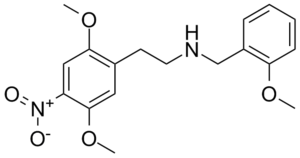
25N-NBOMe (2C-N-NBOMe) is a derivative of the substituted phenethylamine psychedelic 2C-N which was discovered in 2004 by Ralf Heim at the Free University of Berlin and subsequently investigated by a team at Purdue University led by David Nichols.
25N-NBOMe has a notably shorter duration than the rest of the 25x-NBOMe series, with a total duration of 6 hours and a peak duration of 2 hours. It is moderately active at a 1mg dosage, and a dose of 2mg provides a strong/heavy trip. This substance is considerably less potent when compared to the more popular NBOMes such as 25B-NBOMe, 25I-NBOMe, and 25C-NBOMe, all of which lead to strong trips at 1mg+ doses.
In terms of its chemistry, 25N-NBOMe is a substituted phenethylamine with methoxy groups attached to carbons R2 and R5 as well as a nitrophenyl group attached to carbon R4. It differs from 2C-N structurally through a substitution on the amine (NH2) with a 2-methoxybenzyl (BOMe) group, which in turn increases potency about a hundred fold.
In terms of its pharmacology, 25N-NBOMe has efficacy at the 5-HT2A receptor where it is assumed to act as a partial agonist. However, the role of these interactions and how they result in the psychedelic experience continues to remain elusive. At the time of this article’s writing, there is insufficient scientific research to determine this compound’s true nature as the pharmacological properties of 25N-NBOMe have not been described in the literature but only in anecdotal reports. 25N-NBOMe has been sold as a street drug and has only been described in the literature in terms of identification by forensic analysis.
The effects listed below are based upon the subjective effects index and personal experiences of PsychonautWiki contributors. The listed effects will rarely if ever occur all at once but heavier dosages will increase the chances and are more likely to induce a full range of effects.
Physical Effects:
The physical effects of 25N-NBOMe can be broken down into seven components all of which progressively intensify proportional to dosage. These are described below and generally include:
- Wakefulness - 25N-NBOMe may induce wakefulness as a component of its stimulation.
- Stimulation - In terms of its effects on the energy levels of the tripper, 25N-NBOMe is quite stimulating, and leftover stimulation can linger up to 10 hours even after the trip subsides.
- Vasoconstriction - This substance is known to induce mild vasoconstriction as a component of its stimulation.
- Tactile enhancement - 25N-NBOMe increases tactile sensory input and feedback which intensifies tactile comfort and discomfort as well as pleasure and pain.
- Bodily control enhancement - The drug increases muscle and bodily control. When combined with stimulation, this component manifests as a strong drive to partake in physical activities.
- Runny nose - 25N-NBOMe may cause a runny nose and increased mucus production in some users.
- Nausea - Users (especially those prone to it) may experience nausea during the onset. The nausea will subside over the peak.
Cognitive Effects:
The cognitive effects of 25N-NBOMe can be described as quite reminiscent to that of 25C-NBOMe's effects. They can be broken down into nine components all of which progressively intensify proportional to dosage. These are described below and generally include:
- Time distortion - Time may strongly dilate or compress on 25N-NBOMe, especially during the peak. This depends on the situation and the user.
- Introspection - The substance can cause introspective thinking, allowing for the detailed inspection of both events and concepts.
- Conceptual thinking - 25N-NBOMe may cause conceptual thinking (which synergizes very well with introspection), allowing for the detailed inspection of concepts.
- Thought connectivity - This drug may cause thought connectivity which makes for a more fluid and morphing train of thought and therefore may sometimes trigger thought loops.
- Feelings of self-design - 25N-NBOMe may cause feelings of self-design as a result of detailed introspection and loss of personal bias.
- Novelty enhancement - 25N-NBOMe regularly causes fascination, importance and awe due to its varying and synergistic cognitive effects.
- Cognitive euphoria - The cognitive euphoria of 25N-NBOMe resembles that of 25C-NBOMe in that it manifests in waves that alternate between peaking and receeding.
- Laughter - There is an increased proneness to laughter and joy at moderate and heavier doses.
- Disinhibition - The combination of stimulation and joy from the 25N-NBOMe may lead to disinhibition for some users.
Visual effects:
Distortions
- Symmetrical texture repetition - At higher dosages, this proceeds into 3-Dimensional textures.
- 3-Dimensional textures - At moderate and heavier doses, the textures will become 3-dimensional or holographic and appear to float/drift through space/air.
- Drifting (Melting, Flowing, Breathing and morphing) - In comparison to other psychedelics, this effect can be described as highly detailed, slow and smooth in motion, static in their appearance and unrealistic/cartoon-like in style.
Geometry
The visual geometry that is present throughout this trip is often described as similar in appearance to that of LSD. They can be comprehensively described as algorithmic in geometric style, intricate in complexity, fine and zoomed out in detail, fast and smooth in motion, structured in shape, colourful in scheme, glossy in colour, sharp around the edges and mostly rounded across their corners.
In terms of their behaviour, 25N-NBOMe’s geometry leads onto Level 8A visual geometry with Level 8B remaining so far unconfirmed within this substance. They also seem to consistently build up in visual intensity when the tripper stares at a central point. This eventually envelops the visual field and creates the sensation that the tripper has broken through into a continuously shifting geometric landscape or structure with a vast sense of immersive physical size attributed to it.
Hallucinatory states
- Transformations
- Internal hallucinations (Autonomous entities, Settings, sceneries, and landscapes, Alterations in perspective and Scenarios and plots) - 25N-NBOMe is capable of producing a full range of hallucinatory states within the level 1 - 3 range extremely consistently. Level 4 hallucinatory breakthroughs are reported, but very uncommon and inconsistent in comparison to other more commonly used psychedelics such as psilocin, 2C-E and DMT. This effect is more common within dark environments and can be described as internal in their manifestation, lucid in believability, interactive in style and of no particular theme in their content or style.
Auditory effects:
The auditory effects of 25B-NBOMe are common in their occurrence and exhibit a full range of effects which commonly includes:
Physical Health Effects, Potential Addiction and Tolerance:
The toxicity and long term health effects of recreational 25N-NBOMe use does not seem to have been studied in any scientific context and the exact toxic dosage is unknown. This is because 25N-NBOMe is a research chemical with very little history of human usage. Anecdotal evidence from people within the psychedelic community who have tried 25N-NBOMe suggests that there are no negative health effects attributed to simply trying this drug at low to moderate doses or using it very sparingly (but nothing can be completely guaranteed).
Although unknown and unproven, lethal dose with NBOMes are assumed to be 10mg+ oral and 5mg+ intranasal. Please proceed with caution. However, users should be very careful and consider that ingesting 2mg+ of NBOMe series chemicals have proven fatal in some cases, although there are no reported fatalities caused by 25N-NBOMe at the time of the writing of this article.
In terms of its addictive potential, 25N-NBOMe has not been studied formally, but due to its immediate tolerance build up, which lasts up to 2 - 3 weeks after the experience, it is difficult to use this substance compulsively.
Legal issues:
- Brazil: The possession, production and sale is illegal.
-
USA: 25N-NBOMe is unscheduled in the United States. It may be considered an analog of 2C-N (which is a Schedule I drug under the Controlled Substances Act). As such, the sale for human consumption or the use for illicit non-medical or industrial intents and purposes could be prosecuted as crimes under the Federal Analog Act.
-
UK: The 25x-NBOMe series is under a temporary class drug order, lasting one year from 10th June 2013.
Conclusion:
This substance breakdown was written through collaboration between PsychonautWiki contributors Argent, Josikins and Oscarette. The full article, including references, is available here. Have a happy New Year! :)
2C-T-2, broken down and described
Dosage (oral)
Threshold : 3 - 5 mg
Light : 10 - 15 mg
Common : 15 - 20 mg
Strong : 20 - 30 mg
Heavy : 25mg - 40mg
Duration (oral)
Total duration : 5 - 10 hours
Onset : 60 - 90 minutes
Peak : 3 - 7 hours
Come down : 1 - 2 hours
After effects : 2 - 4 hours
Dosage (insufflated)
Threshold : 1 - 3 mg
Light : 2 - 5 mg
Common : 5 - 15 mg
Strong : 5 - 20 mg
Heavy : 7 - 25mg+
Duration (insufflated)
Total duration : 3 - 7 hours
Onset : 5 - 15 minutes
Peak : 2 - 4 hours
Come down : 1 - 2 hours
After effects : 1 - 2+ hours
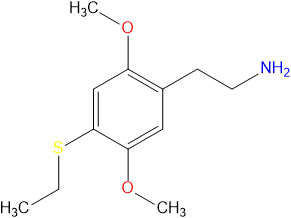
2C-T-2 (2,5-dimethoxy-4-ethylthiophenethylamine) is a psychedelic phenethylamine of the 2C-x family. It was first synthesized by Alexander Shulgin in his book PiHKAL: A Chemical Love Story. This particular substance is part of the so-called “magical half-dozen” which refers to Shulgin’s self-rated most important phenethylamine compounds, all of which except mescaline he developed and synthesized himself. They are found within the first book of PIHKAL, and are as follows: Mescaline, DOM, 2C-B, 2C-E, 2C-T-2 and 2C-T-7.
2C-T-2 is a highly dose sensitive psychedelic known for its strong visuals and very intense body load. Many reports also indicate that the physical effects are too severe for those who are not already experienced with psychedelics or suffer from pre-existing physical conditions, as it is known to cause powerful nausea and general bodily discomfort.
In terms of its chemistry, 2C-T-2 is a synthetic, substituted phenethylamine with methoxy groups attached to carbons R2 and R5 as well as a sulfide chain attached to carbon R4. 2C-T-2 is nearly identical in structure to 2C-T-7. The two molecules differ in the length of their sulfide chain; 2C-T-7 contains a propyl thioether group while 2C-T-2 contains a ethyl thioether group.
In terms of its pharmacology, the mechanism of action that produces 2C-T-2’s hallucinogenic and entheogenic effects has not been established in scientific literature, however its primary psychedelic effects are more than likely a result from its efficacy at the 5-HT2A receptor as a partial agonist. This mechanism of action is shared by many other psychedelic phenethylamines and tryptamines.
Athough no established scientific experiments have been preformed to establish MAO-A inbihition of 2C-T-2, phenethylamine derivatives substituted with an alkylthio group at the 4 position (such as 2C-T-7, 4-MTA, and the 2,5-desmethoxy derivative of 2C-T-7) are known to act as selective monoamine oxidase A inhibitors. Therefore, this substance may likewise have MAOI effects.
The effects listed below are based upon the subjective effects index and personal experiences of PsychonautWiki contributors. The listed effects will rarely if ever occur all at once but heavier dosages will increase the chances and are more likely to induce a full range of effects.
Physical Effects:
The physical effects of 2C-T-2 can be broken down into eight components all of which progressively intensify proportional to dosage. These are described below and generally include:
- Spontaneous tactile sensations - The body high of 2C-T-2 can be described as very intense and uncomfortable in comparison to 2C-E or 2C-B. In high doses, it’s capable of causing painful cramping. It is similar yet distinct from the body high experienced on 2C-T-7, but is considered much more unpleasant. The sensation itself can be described as intense and may manifest itself in the form of a continuously shifting tingling sensation that travels up and down the body in spontaneous waves.
- Stimulation - In terms of its effects on the physical energy levels of the tripper, 2C-T-2 is usually considered to be very energetic and stimulating in a fashion that is quite comparable to that of other phenethylamines such as 2C-B, 2C-E and 2C-P.
- Bodily control enhancement - Although this component is capable of manifesting itself in a distinct and noticeable fashion for most users, it does not generally seem to be as apparent or intense as the same component found within LSD and 2C-B.
- Tactile enhancement
- Nausea - Extreme nausea is commonly reported when consumed in moderate to high dosages and either passes once the tripper has vomited or gradually fades by itself as the peak sets in. It can be described as very painful and violent in comparison to 2C-T-7 or 2C-E.
- Stomach cramps
- Vasoconstriction
- Temperature regulation loss
Cognitive Effects:
The head space of 2C-T-2 is described by many as one which is both insightful and relatively normal in its thought processes even at moderate to high dosages.
The total sum of these cognitive components regardless of the setting generally includes:
- Current mind state enhancement
- Thought acceleration
- Feelings of fascination, importance and awe
- Time distortion
- Analysis enhancement - This effect is consistent in its manifestation and is outrospection dominant.
- Personal bias suppression
- Conceptual thinking
- Ego suppression, loss and death
- Thought loops
- Feelings of interdependent opposites
- Delusions
- Unity and interconnectedness
Visual effects:
Enhancements
2C-T-2 presents a full and complete array of possible visual enhancements which generally includes:
Distortions
2C-T-2 presents a full and complete array of possible visual distortions which generally includes:
- Drifting (Melting, Flowing, Breathing and morphing) - In comparison to other psychedelics, this effect can be described as highly detailed, slow and smooth in motion, static in appearance and extremely realistic in style but with a subtle digital/cartoonish form.
- Tracers
- After images
- Symmetrical texture repetition
- Colour shifting
- Scenery slicing
Geometry
The visual geometry that is present throughout this trip can be described as somewhat similar in appearance to that of Ayahuasca, Psilocin, and 4-ACO-DMT, with mystical and shamanic undertones which combine with synthetic digital undertones reminiscent of LSD or 2C-E. 2C-T-2’s geometry can be comprehensively described through its variations as intricate in complexity, abstract in form, organic but somewhat synthetic in style, structured in organization, brightly lit and multicoloured in scheme, glossy in shading, rounded in edges, large in size, fast in speed, smooth in motion, mostly angular in corners, immersive in depth and consistent in intensity. The visuals have a contradictory “natural” and “synthetic” feel to them which is reminiscent of DOC or 2C-P. Higher dosages are more likely to result in states of Level 8B visual geometry, but may also lead into Level 8A visual geometry (as with 2C-T-7).
Hallucinatory states
2C-T-2 produces a full range of high level hallucinatory states in a fashion that is more consistent and reproducible than that of many other commonly used psychedelics. This holds particularly true in comparison to other substances within the phenethylamine family. These effects include:
- Transformations
- External hallucinations - In comparison to other psychedelics such as Ayahuasca, 2C-T-2 is very high in external hallucinations. This particular effect commonly contains hallucinations with scenarios, settings, concepts and autonomous entity contact manifested as dense solidified geometric matter or physical objects of imagined concepts. They are more common within dark environments and can be described as external in their manifestation, lucid in believability, interactive in style and almost exclusively of religious, spiritual, mystical or a transcendental nature in their overall theme.
- Internal hallucinations - In comparison to other psychedelics such as LSD, 2C-T-2 is very high in hallucinations embedded within visual geometry. This particular effect commonly contains hallucinations with scenarios, settings, concepts and autonomous entity contact. They are more common within dark environments and can be described as internal in their manifestation, lucid in believability, interactive in style and almost exclusively of religious, spiritual, mystical or a transcendental nature in their overall theme.
Auditory effects:
The auditory effects of 2C-T-2 are more common in their occurrence than many more commonly used psychedelics and exhibit a full range of effects which commonly includes:
Physical Health Effects, Potential Addiction and Tolerance:
The toxicity and long term health effects of recreational 2C-T-2 use do not seem to have been studied in any scientific context and the exact toxic dosage is unknown. This is because 2C-T-2 is a research chemical with very little history of human usage. Anecdotal evidence from people who have tried 2C-T-2 within the psychedelic community suggests that there are no negative health effects attributed to simply trying this drug at low to moderate doses or using it very sparingly (but nothing can be completely guaranteed).
There is no current data for the LD50 of 2C-T-2, but it is thought to be high.
2C-T-2 does not seem to be physically addictive and many users experience a self-regulating quality, especially due to the physical manifestations of its effects. There seems to be a tolerance build up when used consecutively multiple days in a row which requires one to double their dosage each time to achieve the same effects.
If 2C-T-2 does have MAOI effects, this could indicate that 2C-T-2 is more likely to induce serotonin syndrome, especially at high dosages, than other serotonergic hallucinogens. This may make it dangerous to combine with certain substances such as MDMA, AMT, Ayahuasca or any substance which releases neurotransmitters such serotonin or those with similar pharmacological effects.
Legal issues:
- UK: 2C-T-2 is a Class A substance making it illegal to possess, manufacture, or import.
- USA: 2C-T-2 is a Schedule 1 drug in the USA, making it illegal to possess, manufacture, or import.
- Australia: 2C-T-2 is illegal in Australia as of 2005.
- Belgium: 2C-T-2 was added to the list of illegal psychotropic substances on Nov 8, 2004.
- Brazil: 2C-T-2 is illegal in Brazil as of Feb 18, 2014.
- Denmark: 2C-T-2 was added to category B of the controlled substances list on August 23, 2003.
- E.U.: EU Council published an order on Dec 6 2003, asking all member states to control 2C-I, 2C-T-2, 2C-T-7, and TMA-2.
- Germany: The drug is on list I / highest level of control, making it unable to be prescribed, manufactured, or possessed as of Oct 7, 1998.
- Italy: 2C-T-2 was added to the “Tabella 1” in a Jan 11, 2005 Ministry of Health statement.
- Japan: 2C-T-2 is controlled as a “Designated Substance” (Shitei-Yakubutsu) by the Pharmaceutical Affairs Law, making it illegal to possess or sell
- Netherlands: It was classified as an unregistered pharmaceutical as of April 12, 1999. Unlicensed manufacture, sale, import, trade and possession of this substance can be prosecuted.
Conclusion:
In conclusion, 2C-T-2 offers incredible depth and a full spectrum of deep psychedelic effects with a cognitive head space that’s closer to a tryptamine psychedelic than many other phenylethylamines. The nausea and physical body load is very intense in proportion to 2C-T-7 and other phenylethylamines, which may be very undesirable to some, however it is still completely worthy of its position within the magical half dozen.
This substance breakdown was written in collaboration with PsychonautWiki admin Cocoanatta. For a more detailed breakdown please click the here.
bk-MDMA, broken down and described
Dosage (oral):
Threshold : 60mg
Light : 100 - 150mg
Common : 150 - 250mg
Strong : 200 - 300mg
Duration (oral):
Total : 3 - 5 hours
Onset : 20 - 60 minutes
Peak : 60 - 90 minutes
Offset : 60 - 120 minutes
After effects : 1 - 6 hours
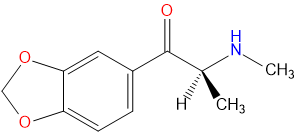
Methylone (also known as M1, 3,4-methylenedioxy-N-methylcathinone, MDMC and bk-MDMA) is an entactogen and stimulant of the phenethylamine, amphetamine and cathinone classes. It was first synthesized by chemists Peyton Jacob III and Alexander Shulgin in 1996 for potential use as an antidepressant.
This compound is often used as a substitute for MDMA due to its similar range of subjective effects. However, in spite of behavioral and pharmacological similarities between methylone and MDMA, the observed subjective effects of both drugs are not completely identical. Alexander Shulgin wrote of the former:
"Methylone has almost the same potency of MDMA, but it does not produce the same effects. It has an almost antidepressant action, pleasant and positive, but not the unique magic of MDMA."
"Methylone" is also a trademarked brand name for an injectable form of methylprednisolone, a corticosteroid hormone used to treat arthritis and severe allergic reactions; hence, methylone may be confused with it.
In terms of its chemistry, 3,4-methylenedioxy-N-methylamphetamine is part of the phenethylamine, cathinone and amphetamine families. There is a methylenedioxy ring attached to carbons R3 and R4, as well as methyl chains at Rα and RN. Methylone is a close structural analog of MDMA, differing by the addition of a β-ketone group attached to the beta position of the amine chain.
In terms of its pharmacology, methylone acts as a mixed reuptake inhibitor/releasing agent of serotonin, norepinephrine, and dopamine. These are the neurotransmitters in charge of pleasure, motivation and focus. This is done by inhibiting the reuptake and reabsorption of the neurotransmitters after they have performed their function of transmitting a neural impulse, essentially allowing them to accumulate and be reused, causing physically stimulating and euphoric effects.
In comparison to MDMA, it has approximately 3x lower affinity for the serotonin transporter, while its affinity for the norepinephrine and dopamine transporters is similar. Notably, methylone’s affinity for the vesicular monoamine transporter 2 (VMAT2) is about 13x lower than that of MDMA. The results of these differences in pharmacology relative to MDMA are that methylone is less potent in terms of dose, has more balanced catecholaminergic effects relative to serotonergic, and behaves more like a reuptake inhibitor like methylphenidate than a releaser like amphetamine; however, methylone still has relatively robust releasing capabilities.
The effects listed below are based upon the subjective effects index and personal experiences of PsychonautWiki contributors. The listed effects will rarely if ever occur all at once but heavier dosages will increase the chances and are more likely to induce a full range of effects.
Physical effects:
The physical effects of methylone can be broken down into seven components all of which progressively intensify proportional to dosage. These are described below and generally include:
- Spontaneous tactile sensations - The “body high” of methylone can be described as a moderate to extreme euphoric tingling sensation that encompasses the entire body. It is capable of becoming overwhelmingly pleasurable at higher dosages. This sensation maintains a consistent presence that steadily rises with the onset and hits its limit once the peak has been reached.
- Stimulation - In terms of its effects on the user’s physical energy levels, methylone is commonly considered to be extremely stimulating and energetic. This encourages activities such as running, climbing and dancing in a way that makes methylone a popular choice for musical events such as festivals and raves. The particular style of stimulation which methylone presents can be described as forced. This means that at higher dosages, it becomes difficult or impossible to keep still as jaw clenching, involuntarily bodily shakes, and vibrations become present, resulting in an extreme unsteadiness of the hands and a general lack of motor control.
- Vibrating vision - At high dosages, a person’s eyeballs may even begin to spontaneously wiggle back and forth in a rapid motion, causing the vision to become blurry and temporarily out of focus— a condition known as nystagmus.
- Dehydration - Feelings of dry mouth and dehydration are a universal experience with methylone; this effect is a product of an increased heart rate and an extreme motivation to engage in strenuous physical activities. While it is important to avoid becoming dehydrated, especially when out dancing in a hot environment, there have been a number of users suffering from water intoxication through over-drinking so it is advised that users simply sip at water and never over-drink.
- Difficulty urinating - Higher doses of methylone result in an overall difficulty when it comes to urination. This is an effect that is completely temporary and harmless, due to methylone’s promotion of the release of anti-diuretic hormone (ADH). ADH is responsible for regulating urination. This effect can be lessened by simply relaxing, but can be significantly relieved by placing a hot flannel over the genitals to warm them up and encourage blood flow.
- Loss of temperature regulation
- Tactile enhancement
Cognitive effects:
The cognitive effects of methylone can be broken down into six components all of which progressively intensify proportional to dosage. The general head space of methylone is described by many as one of extreme mental stimulation, feelings of love or empathy and powerful euphoria. It contains a large number of typical psychedelic, entactogenic and stimulant cognitive effects.
The most prominent of these cognitive effects generally include:
- Euphoria - Strong emotional euphoria and feelings of happiness are present within methylone and are likely a direct result of serotonin and dopamine release. In comparison to MDMA, it is closer in effects to that of the euphoria felt within amphetamine and mephedrone.
- Empathy, love and sociability enhancement - Although distinct and powerful in its effects, this particular feeling is less pronounced and therapeutic when compared to that of MDMA. It can be described as less forceful and more internal in its manifestation, resulting in feelings of love and empathy that are not necessarily felt as essential to express to others.
- Time distortion - Strong feelings of time compression are common within methylone and speed up the experience of time quite noticeably.
- Unity and interconnectedness - Experiences of unity, oneness and interconnectedness between levels 2 - 3 are common within methylone. This component most consistently manifests itself at high dosages within large crowds at raves and musical events in the form of “becoming one with the crowd.”
- Thought acceleration
- Mindfulness
Physical Health Effects, Potential Addiction and Tolerance:
The toxicity and long term health effects of recreational methylone use does not seem to have been studied in any scientific context and the exact toxic dosage is unknown. This is because methylone is a research chemical with very little history of human usage. Anecdotal evidence from people within the psychonaut community who have tried methylone suggests that there are no negative health effects attributed to simply trying this drug at low to moderate doses or using it very sparingly (but nothing can be completely guaranteed).
Tolerance develops rapidly with repeated usage, so periods of extended use require increasing doses of the drug in order to achieve the same effect. Addiction is a serious risk with heavy recreational use of any stimulant where compulsive redosing is common.
Legal Issues:
- Netherlands: In the Netherlands, methylone is covered under the medicine act. Because methylone is not registered officially, as such, it is forbidden to trade in methylone.
- New Zealand: In New Zealand, although methylone is not explicitly scheduled and falls outside the strict definitions of an “amphetamine analogue” in the Misuse of Drugs Act, it is considered to be “substantially similar” to methcathinone and is thus considered by law enforcement authorities to be a Class C illegal drug.
- United Kingdom: In the UK, methylone has been illegal since the 16/04/2010 revision of the misuse of drugs act.
- Sweden: Methylone has been listed as a schedule I narcotic in Sweden as of Oct 1 of 2010.
- Canada: Although not listed as a Schedule 1 substance, Health Canada reports that methylone falls under the scheduling as an analogue of amphetamine. However, Methylone bears the exact chemical difference between amphetamine and cathinone; cathinone is listed as not being an analogue of amphetamine leading to imply that methylone is unscheduled in Canada.
- United States: As of October 21, 2011 the DEA has issued an emergency ban on methylone. It is illegal to possess and distribute.
Conclusion:
5-MeO-DMT, broken down and described
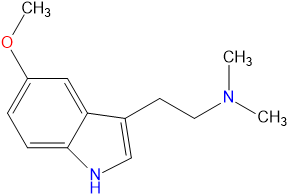
Dosage (smoked)
Threshold : 1 - 2 mg
Light : 2 - 5 mg
Common : 5 - 10 mg
Strong : 10 - 20 mg
Heavy : 20mg +
Duration (smoked)
Total duration : 30 minutes
Onset : 0 - 1 mins
Peak : 1 - 15 minutes
Come down : 3 - 5 mins
After effects : 15 - 60 mins
Dosage (insufflated)
Threshold : 3 - 5 mg
Light : 5 - 10 mg
Common : 8 - 15 mg
Strong : 10 - 25 mg
Heavy : 25mg+
Duration (insufflated)
Total duration : 2 - 3 hours
Onset : 1 - 10 mins
Peak : 30 - 60 mins
Come down : 30 - 60 mins
After effects : 1 - 3 hrs
5-MeO-DMT (5-methoxy-N,N-dimethyltryptamine) is a powerful psychedelic tryptamine. It is found in a wide variety of plant species, and a single psychoactive toad species. Like its close relatives DMT and bufotenin (5-HO-DMT), it has been used as an entheogen by South American shamans for thousands of years. In modern times, however, it is primarily acquired in its pure form through the use of online research chemical vendors.
When used as a drug in its purified form, 5-MeO-DMT is vaporized, insufflated, or injected and is active at a dose of as little as 2 mg. 5-MeO-DMT is active orally when taken with an MAOI, but according to numerous reports this combination is extremely unpleasant and has a strong body load.
In terms of its chemistry, 5-MeO-DMT is made up of a tryptamine backbone, with a methoxy group substituted onto carbon R5 and two methyl groups substituted onto the nitrogen RN1 and RN2. 5-MeO-DMT is a methoxy derivative of DMT. It is also the O-methyl analogue of bufotenin (5-HO-DMT) and occurs in many organisms alongside of this compound.
In terms of its pharmacology, 5-Meo-DMT’s psychedelic effects are believed to come from its efficacy at the 5-HT2A receptor as a partial agonist. Specifically, this molecule shows high affinity for the 5-HT2 and 5-HT1A subtypes. Additional mechanisms of action such as reuptake inhibition of neurotransmitters such as serotonin, noradrenaline and dopamine are involved also.This can result in 5-MeO-DMT becoming dangerously toxic when combined with MAOIs, RIMAs, SSRIs stimulants or any substance which acts as a releasing agent or reuptake inhibitor of neurotransmitters.
5-MeO-DMT is O-demethylated by polymorphic cytochrome P450 2D6 (CYP2D6) to an active metabolite, bufotenin.
However, the role of these interactions and how they result in the psychedelic experience continues to remain elusive.
The effects listed below are based upon the subjective effects index and personal experiences of PsychonautWiki contributors. The listed effects will rarely if ever occur all at once but heavier dosages will increase the chances and are more likely to induce a full range of effects.
Physical Effects:
The physical effects of 5-MeO-DMT can be broken down into ten components all of which progressively intensify proportional to dosage. In comparison to its often relatively mild accompanying cognitive and visual effects, 5-MeO-DMT seems to have by far the most proportionally intense and overwhelming physical sensations found within the known psychedelic experience. These individual components are complex, overwhelming and equally capable of being interpreted as either extremely pleasurable or uncomfortable.
- Enhancement of tactile sensations - This particular component is perhaps the most overwhelming sensation within the entirety of the 5-MeO-DMT experience. It increases the intensity of tactile sensations to such an overwhelming extent that it induces a sustained and repeatable full body orgasm within every nerve ending across the entire body. The experience of this results in the perception of having a difficulty sustaining the act of breathing. It is worth noting, however, that this is not a genuine or dangerous experience of respiratory depression and is perfectly safe.
- Physical euphoria
- Nausea
- Increased bodily control
- Loss of motor control
- Bodily pressures
- Skin flushing
- Changes in gravity
- Loss of temperature regulation
- Increased bodily weight
Cognitive Effects:
The most prominent of 5-MeO-DMT’s cognitive effects generally include:
- Current mind state enhancement
- Mindfulness
- Conceptual thinking
- Thought connectivity
- Anxiety
- Time distortion
- Direct communication with the subconscious
- States of unity and interconnectedness
- Ego suppression, loss and death
- Delusions
- Amnesia
Visual effects:
The visual effects of 5-MeO-DMT can be broken down into five components all of which progressively intensify proportional to dosage. In comparison to its consistently overwhelming and intense accompanying cognitive and physical effects, 5-MeO-DMT seems to have some of the most proportionally underwhelming visual effects found within the known psychedelic experience.
- Visual acuity enhancement and Visual acuity suppression - 5-MeO-DMT is equally capable of both decreasing and increasing visual acuity. The outcome of which effect will manifest seems to be chosen almost entirely at random and is largely setting dependent.
- Colour enhancement
- Colour shifting
- Drifting (Morphing, Breathing, Melting, Flowing) - In comparison to other psychedelics, this effect can be described as identical to DMT in its style, highly detailed, slow and smooth in motion and static in appearance.
- Geometry - The visual geometry that is present throughout this trip does not usually occur and never extends beyond level 7 at its highest state. It is very similar to DMT although significantly smaller in size and more likely to manifest in darkness or without distractions. In terms of appearance, it can be comprehensively described through its variations as intricate in complexity, abstract in form, equally organic and digital in feel, structured in organization, brightly lit, multicoloured in scheme, glossy in shading, equal in sharp and soft edges, small in size, fast in speed, smooth in motion, equal in rounded and angular corners, immersive in depth and consistent in its intensity.
Auditory effects:
The auditory effects of 5-MeO-DMT are common in their occurrence and exhibit a full range of effects which generally include:
Natural sources:
Colorado River toad: The Colorado River toad (Incilius alvarius), also known as the Sonoran Desert toad, is a psychoactive toad found in northern Mexico and the southwestern United States. Its skin and venom contain 5-MeO-DMT and bufotenin.
The toad’s primary defense system are glands that produce a poison that may be potent enough to kill a grown dog. These parotoid glands also produce the 5-MeO-DMT and bufotenin for which the toad is known. Fresh venom can easily be collected from these glands without harm to the toad. To do this, obtain a flat glass plate or any other smooth, nonporous surface of at least 12-inches square and hold the toad in front of the plate (which is fixed in a vertical position). When the desert toad is stroked near the parotid glands in the neck region, there is a squirting out of this venom. When it is allowed to dry on a hard surface it takes on the texture of rubber cement. It contains up to 15% 5-MeO-DMT, as well as N-methyl-5-methoxytryptamine, 5-MeO-NMT and Bufotenine, which have their own entries. In this manner, the venom can be collected on the glass plate, free of dirt and liquid released when the toad is handled.
Physical Health Effects, Potential Addiction and Tolerance:
The toxicity and long term health effects of recreational 5-MeO-DMT use do not seem to have been studied in any scientific context and the exact toxic dosage is unknown. Anecdotal evidence from people within the psychedelic community who have tried 5-MeO-DMT suggests that although physically intense, this substance is well tolerated and physically benign just like other tryptamines. There are no known negative health effects attributed to trying this substance at low or heavy dosages and it has a long history of usage dating back thousands of years.
Deaths from 5-MeO-DMT are rare but, as a powerful monoamine reuptake inhibitor, injury can occur when excessive doses are taken or when taken with drugs such as MAOIs, RIMAs, stimulants and any substance which act as a releasing agent or reuptake inhibitor of neurotransmitters such as serotonin and dopamine. This has resulted in well documented deaths that are easily avoidable and could have been otherwise prevented.
There is a strong tolerance gained after a single dosage of this compound. This diminishes effects greatly if one tries to redose but returns to base line levels within 24 hours.
Legal issues:
- Denmark: As of December 1, 2004, 5-MeO-DMT was legally restricted to “medical or scientific purposes”.
- Gemany: As of December 1, 2004, 5-MeO-DMT was legally restricted to “medical or scientific purposes”.
- Greece: 5-MeO-DMT became a controlled substance in Greece on February 18, 2003 [EU Legal Database].
- New Zealand: 5-MeO-DMT is Schedule I (Class A) in New Zealand.
- Sweden: Sveriges riksdags health ministry Statens folkhälsoinstitut classified 5-MeO-DMT as “health hazard” under the act Lagen om förbud mot vissa hälsofarliga varor (translated “Act on the Prohibition of Certain Goods Dangerous to Health”) as of Oct 1, 2004, in their regulation SFS 2004:696 listed as 5-metoxi-N,N-dimetyltryptamin (5-MeO-DMT), making it illegal to sell or possess.
- Switzerland: 5-MeO-DMT is Schedule I in Switzerland.
- Romania: 5-MeO-DMT is illegal in Romania since February 2010.
- USA: 5-MeO-DMT was added to Schedule I, effective January 19, 2011. This means it is illegal to manufacture, buy, possess, or distribute (sell, trade or give) without a DEA license.
Conclusion:
In conclusion, 5-MeO-DMT is an A-Typical psychedelic which although interesting, remains very consistent and repetitive in comparison to other tryptamines such as DMT itself. It is worth trying for the sheer physical intensity and euphoria of it but I would not recommend this substance to anybody who is looking to experience genuine psychedelia.
This substance breakdown was written through collaboration between PsychonautWiki contributors Pjosepherum, Josifikins and Oscarette. The full article is available here.